

By: Heath Wood
After a slow morning of minimal gobbling and turkeys that decided to take a different route than I anticipated, I opted to do a run and gun style of turkey hunting while returning to my vehicle.
To run and gun for turkeys means to travel a property while stopping periodically to call, which can strike a tom into gobbling. Typically, when doing a run and gun style of hunting, the hunter walks thirty or forty yards up to as far as a hundred yards between calling attempts. When a tom is located, the hunter then quickly finds a setup and begins to call the tom into shooting range.
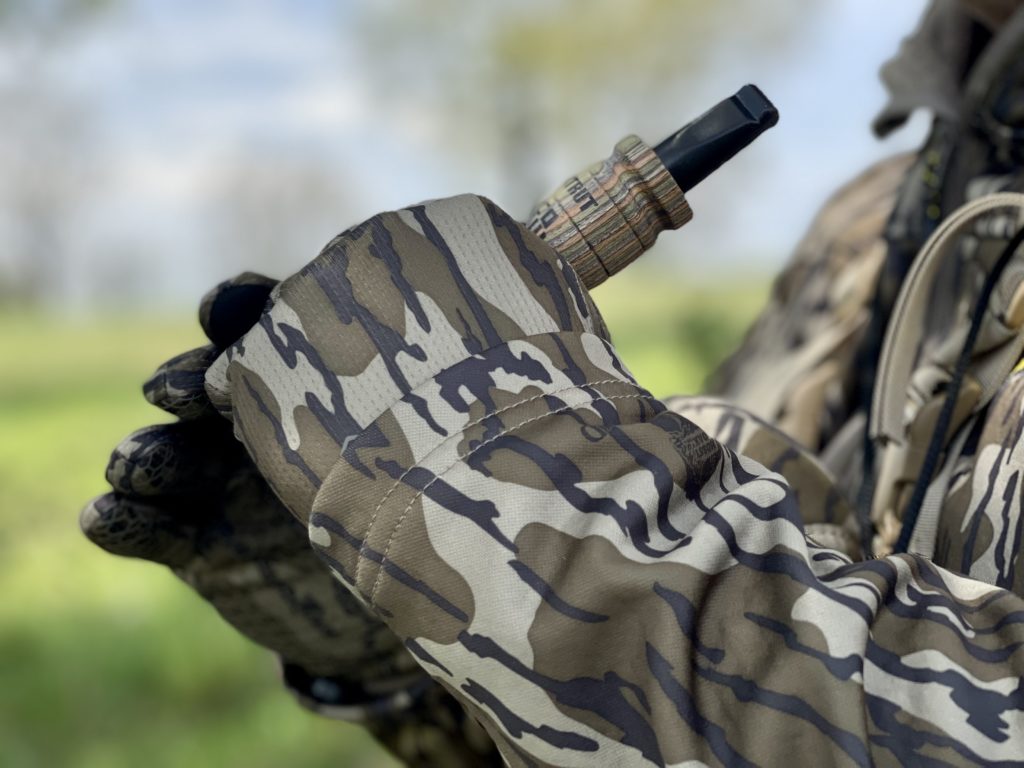
While returning to my vehicle, I recognized that I had several hundred yards of walking before reaching my destination. With several hills along the way, I knew running and gunning would be ideal for one last chance to locate a gobbler before calling it quits for the day. After walking approximately one hundred yards, I stopped to use my Hunters Specialties Loco Crow Call. After a few short bursts of the caw of a crow, a tom answered a mere hundred yards in the direction I was headed. I hurried as fast as possible while staying safe with a loaded shotgun. The only thing in between the direction of the gobbling tom and myself was one large brush pile that had been made by a dozer a few months prior. Using the pile as my main concealment, I rushed to get into position to take a shot. Almost to the brush pile, the tom gobbled again. This time he was a mere fifty yards on the other side. I quickly sat next to the only tree within reach that would conceal my whereabouts and placed my shotgun up on my knee and into shooting position. With a diaphragm call still in the corner of my mouth from the morning’s hunt, I made three soft yelps to let the tom know my location. Seconds later, the tom appeared from behind the brush pile close to twelve yards, where I made a successful shot.
If done correctly, the run and gun technique can be very effective when getting into close range of a tom turkey. Below are three tips on effectively running and gunning for spring gobblers.
Lightly Pack and Dress
When running and gunning, it is likely that the hunter will move for an extended period excessively. It is vital to dress in light clothing to avoid becoming tired or overheated and ensure easy movement, especially during the latter part of spring when temperatures can reach mid-seventies to low eighties by the afternoon.
To lighten the hunter’s load while walking, the hunter should avoid packing unnecessary equipment. Items such as extra calls, seats, blinds, or even a hunter’s turkey vest should be left behind because of non-use while running and gunning.
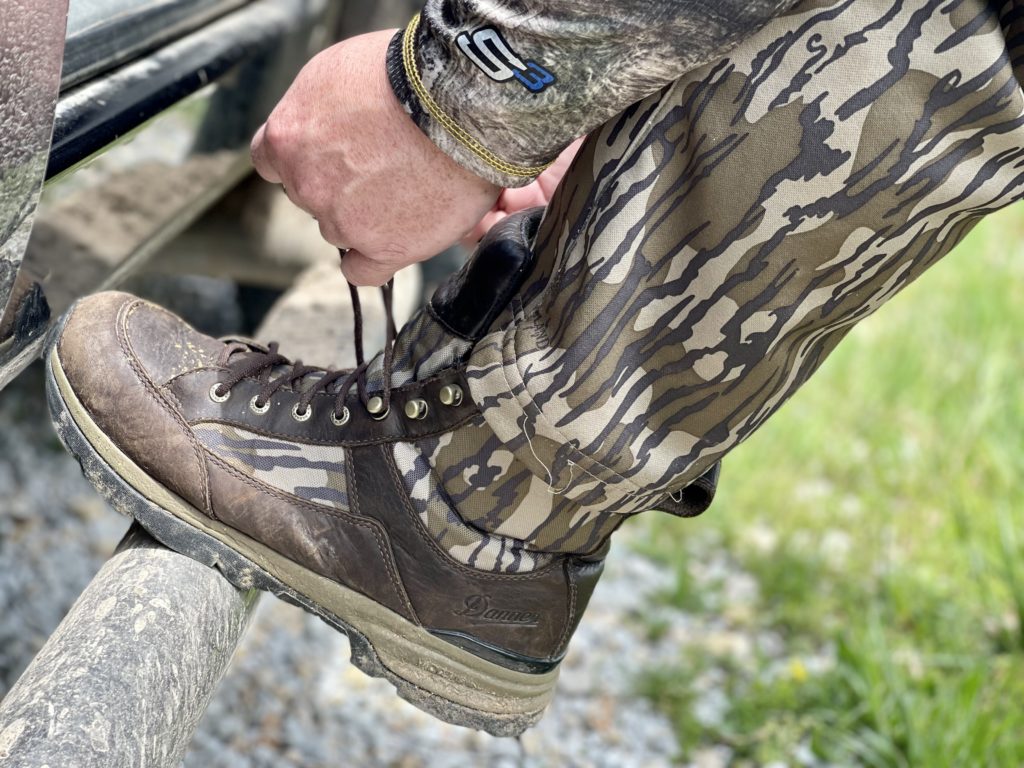
Another essential part of dressing light is wearing the proper boots. Instead of the typical tall rubber boots that turkey hunters commonly wear, hunters should wear a lighter lace-up style of a hunting boot, such as Danner’s Recurve Hunting Boot, which is better for continuous walking.
Be Ready Before Calling
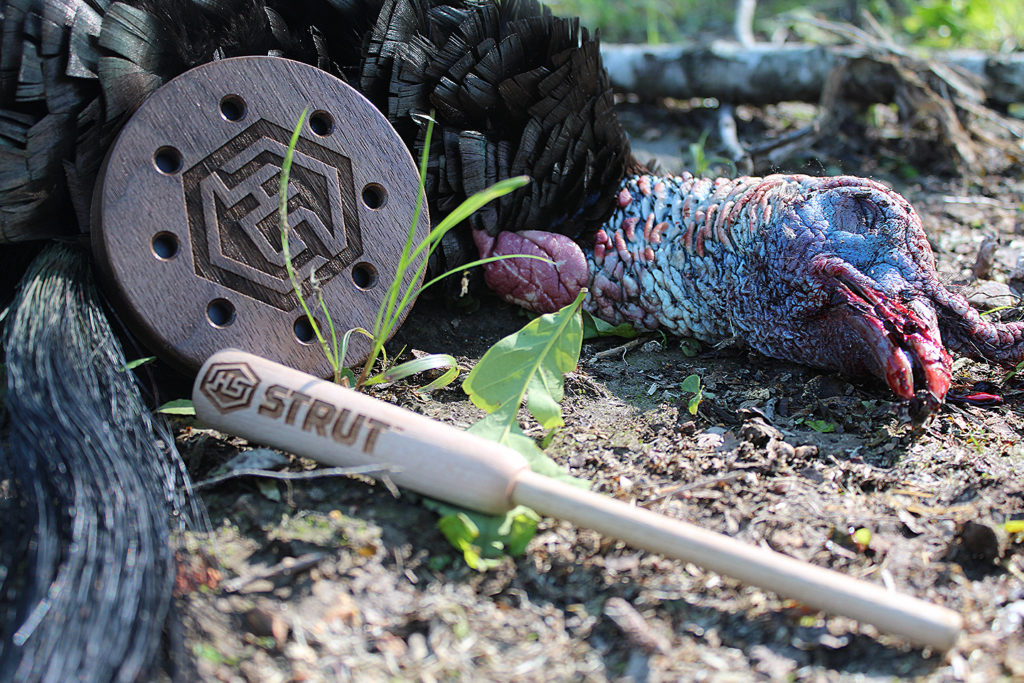
One of the most prominent mistakes hunters make during a run and gun hunting style is getting caught in the open after locating a gobbler. Typically, when hunters try to locate a gobbler, they use a locator call such as a crow call or an owl hooter. Hunters can also elect to use an actual turkey call such as a box call like the H.S. Strut Long Stroker, a pot call such as the H.S. Strut Select Closing Time Pot Call, or a diaphragm call to entice a tom to respond by gobbling.
To avoid being busted by a turkey’s incredible eyesight, it is vital to have a sitting spot chosen ahead of time that provides concealment before attempting to locate. Suppose a gobbler responds at close range, as my hunt explained earlier. In that case, the hunter needs the opportunity to sit down to be in the proper shooting position quickly to successfully proceed in calling the tom the rest of the way until he is in shooting range.
Carry Optics
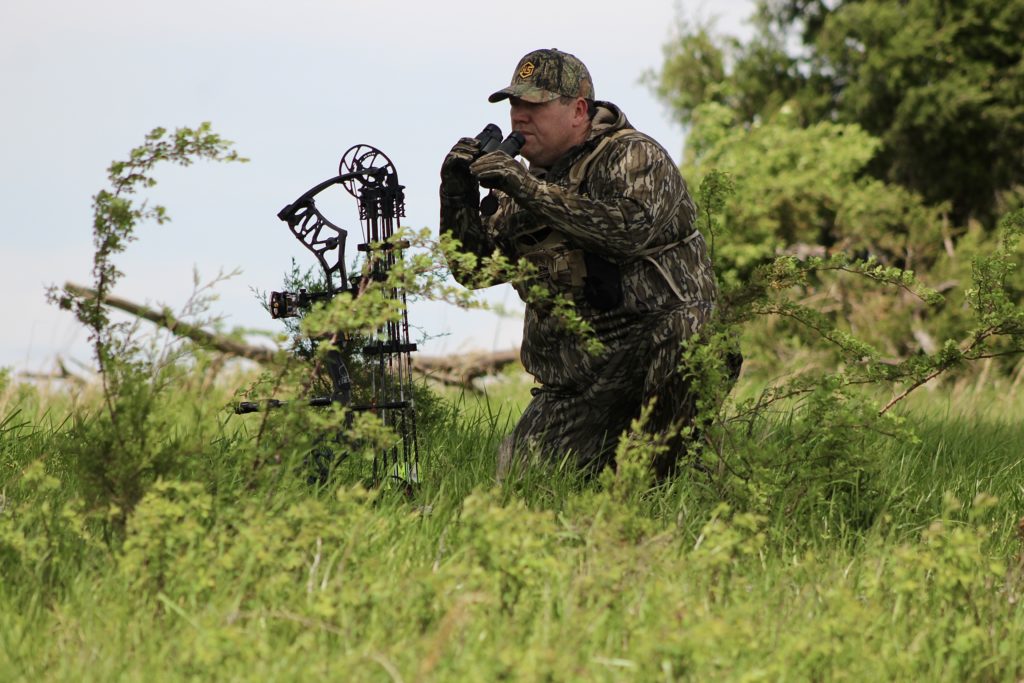
When covering a large area while running and gunning, it is good to have a quality pair of optics to observe what always lays ahead. It is vital to dress and pack lightly, so hunters must use a smaller, more compact pair of optics such as the Vortex Optics Razor H.D. 8X42 binoculars. The Razor H.D. binoculars are compact enough that the hunter can carry them on a chest harness without being weighted down.
By having the ability to use binoculars while running and gunning, the hunter will reap advantages. For example, the hunter can peak over a hill and glass fields where gobblers typically like to hang out and strut for the hens. A hunter can also use binoculars to view fence rows, power lines, and other open areas to ensure no turkeys are already there before walking nearby. Whether a hunter is using a shotgun or a bow, using a pair of optics keeps them one step ahead in the concealment game and away from the eyesight of nearby turkeys.
Most turkey hunters practice patience when calling a gobbler into shooting range. Sitting inside a ground blind or while tucked up close to a large tree, the hunter must wait for the tom to come to them. When turkeys don’t cooperate, and a more aggressive approach is required, the hunter should try to run and gun for spring gobblers.